Data Integration & Management Service Platform
Data is scattered across multiple systems and databases, each managed with different standards.
Lack of tools to visualize and present the overview of oilfield data assets, making it hard to assess their status.
Oilfield personnel lacks fast and accurate data query tools.
A unified data service model hasn’t been formed.
No unified definition or standardized tools for the acquisition of data at the source.
No tools to detect the faulty data in real time operation, leading to delayed incidents discovery.
Business and data relationships are poorly managed, leaving data weakly linked to workflows.
Establish unified business identifiers, data classification, hierarchy, naming, and tagging systems to ensure consistency and efficient data flow across departments and systems.
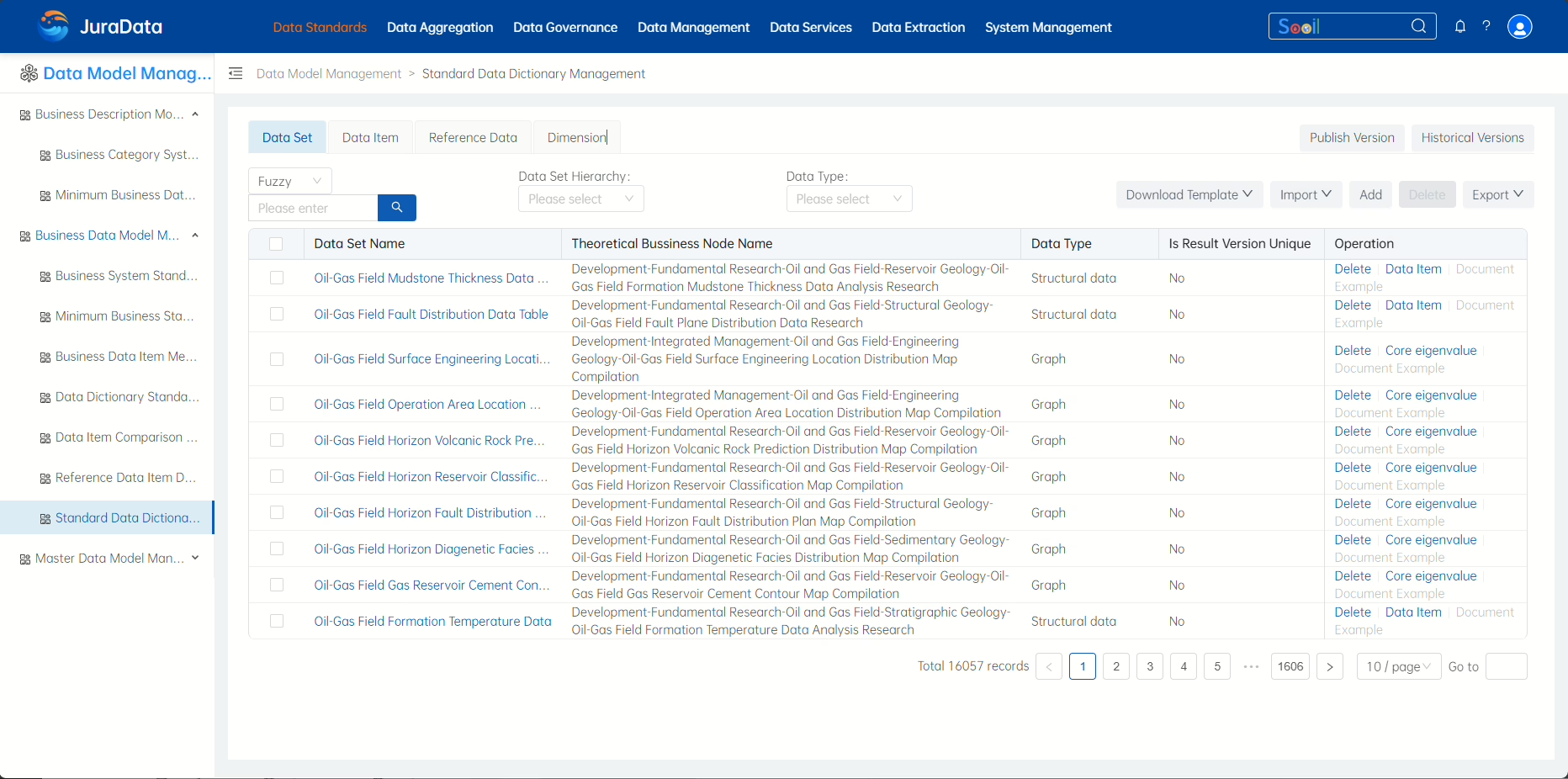
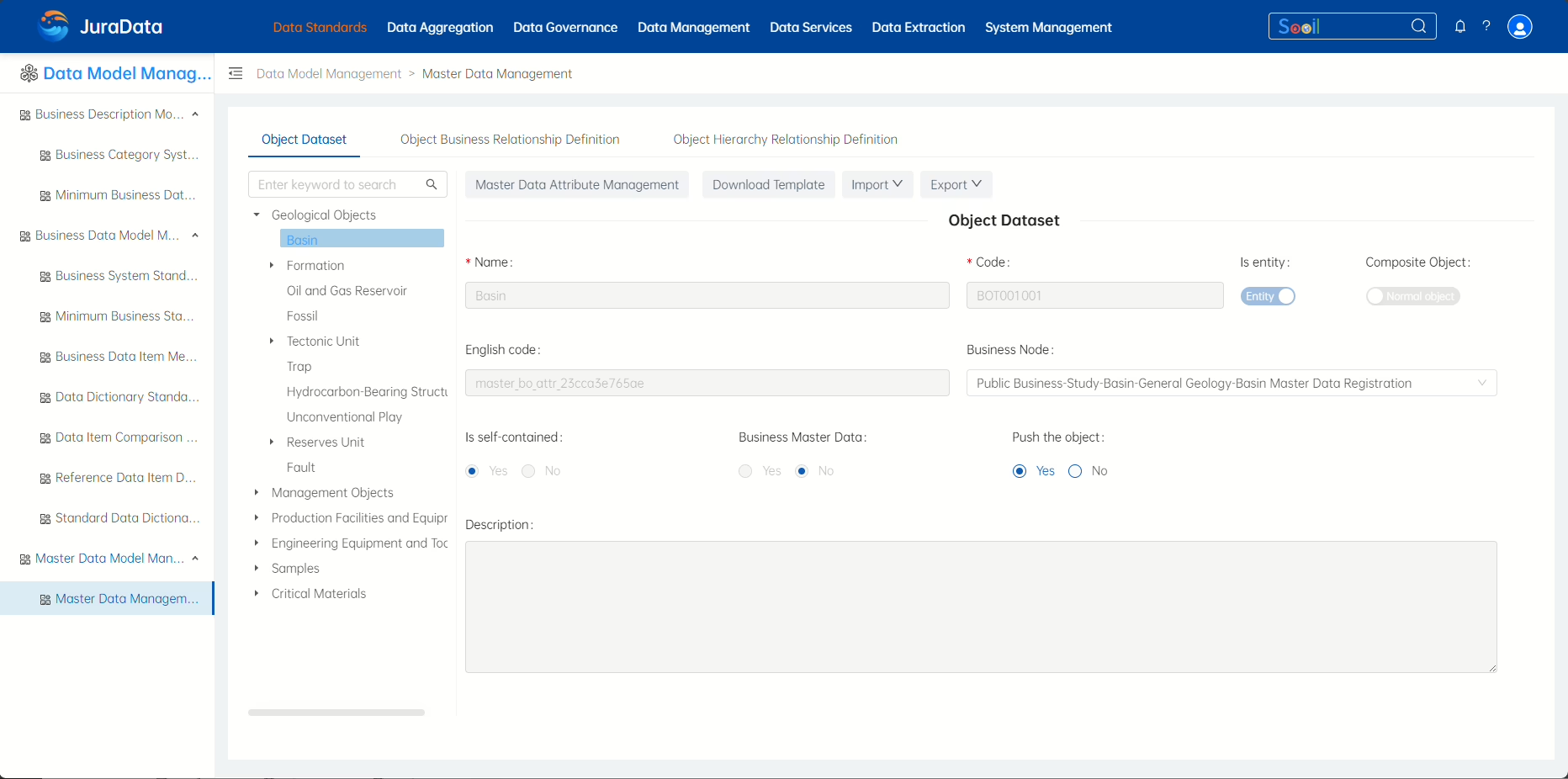
Build end-to-end business, standard, and master data models to deeply integrate data with business processes.
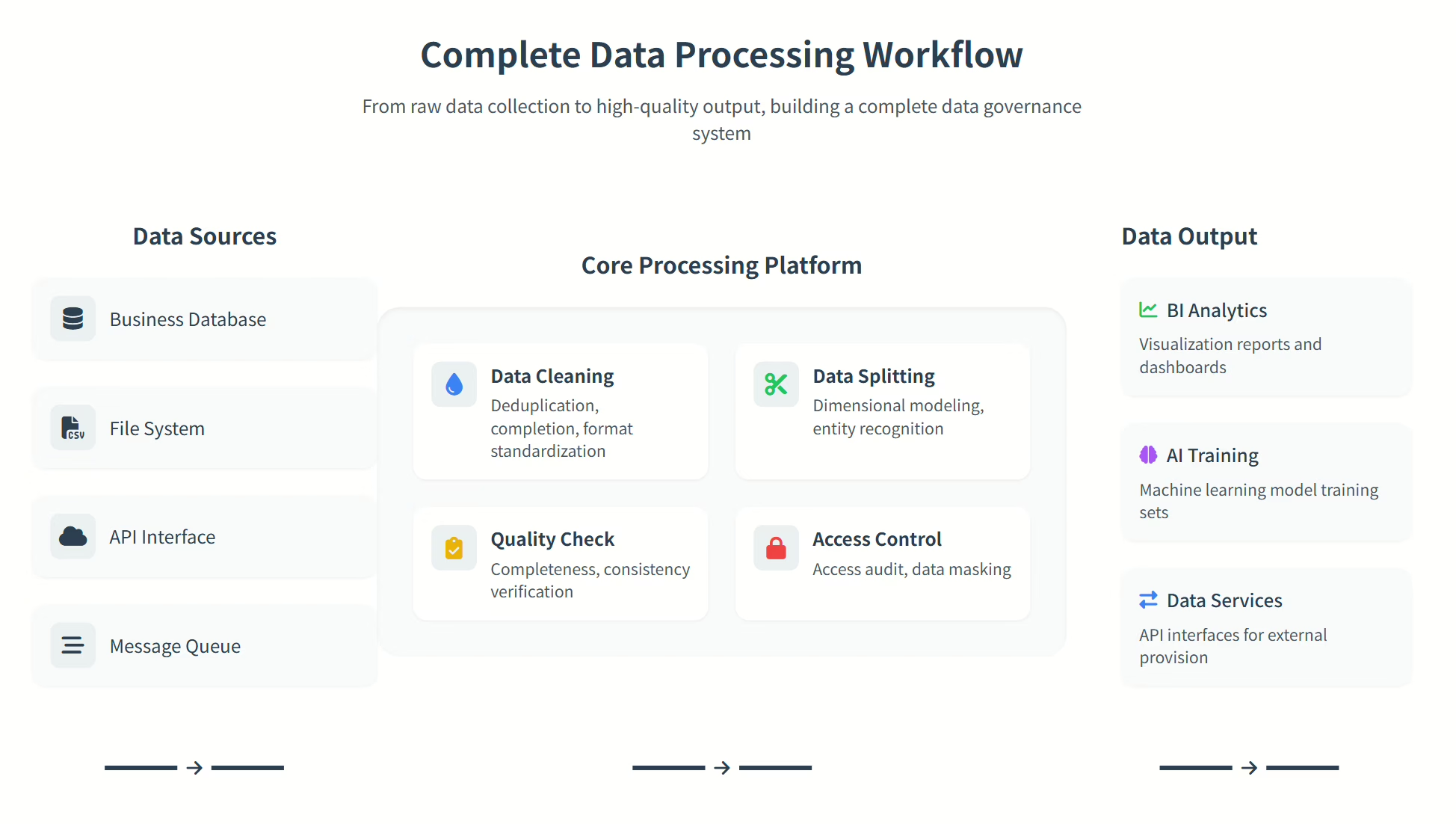
Provide a full lifecycle governance system from data capture, aggregation, and extraction to quality and access control, ensuring authenticity, completeness, and security.
Monitor statistics and quality of all data types, enabling visualized management of enterprise-wide data assets and clarity on their value and usage.
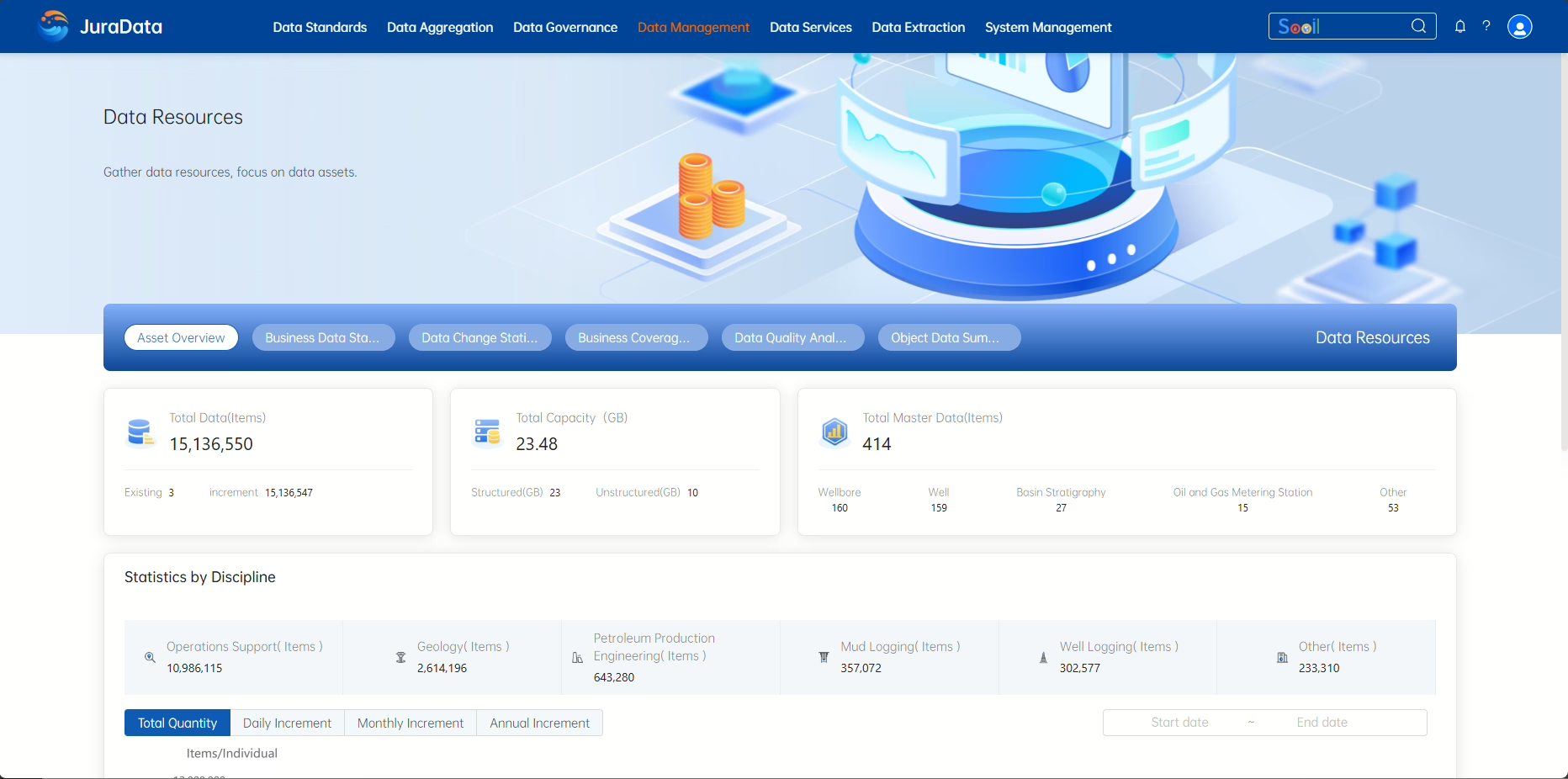
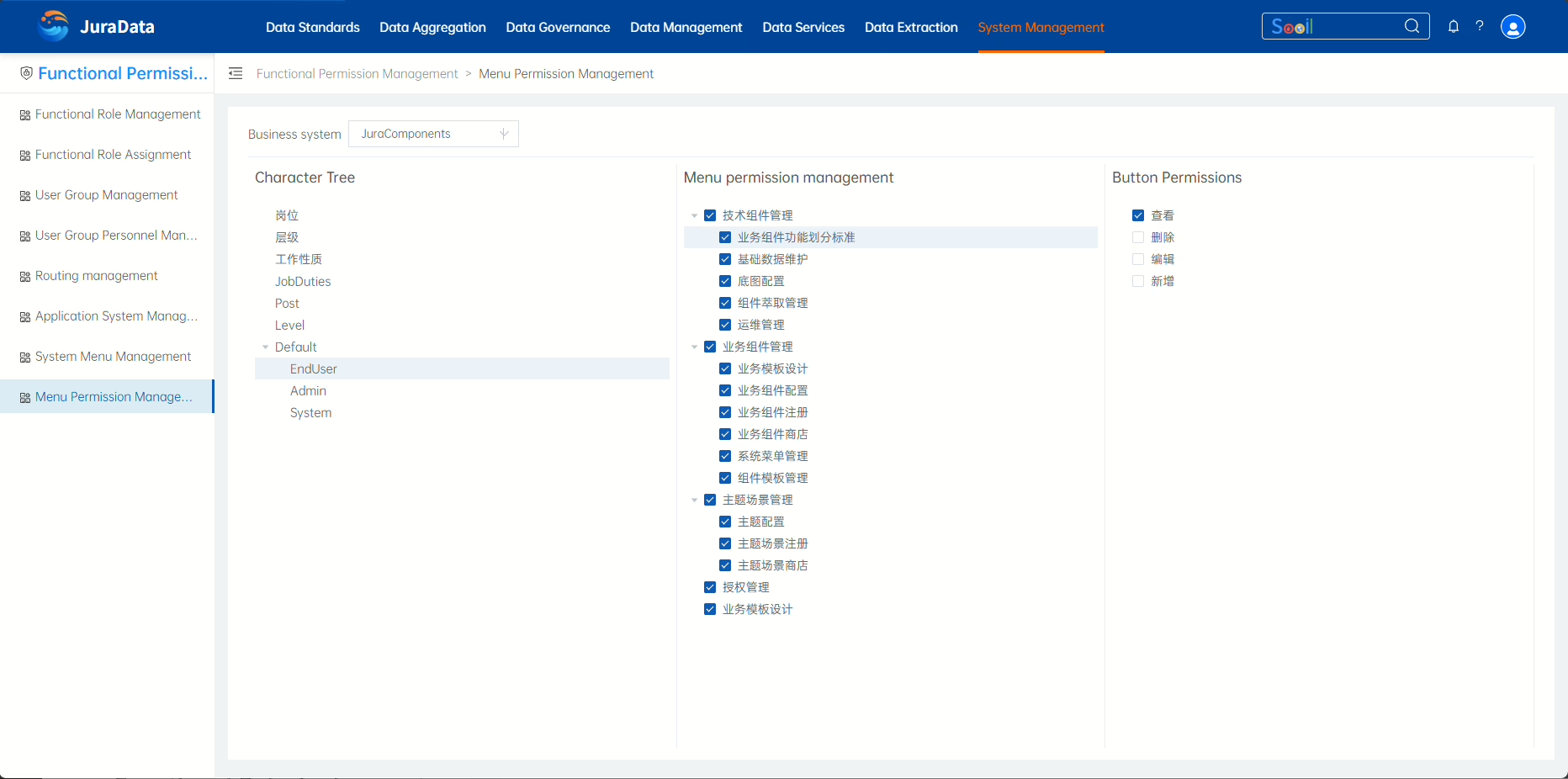
Deliver monitoring, access control, and business support functions to ensure long-term stability of the governance framework.
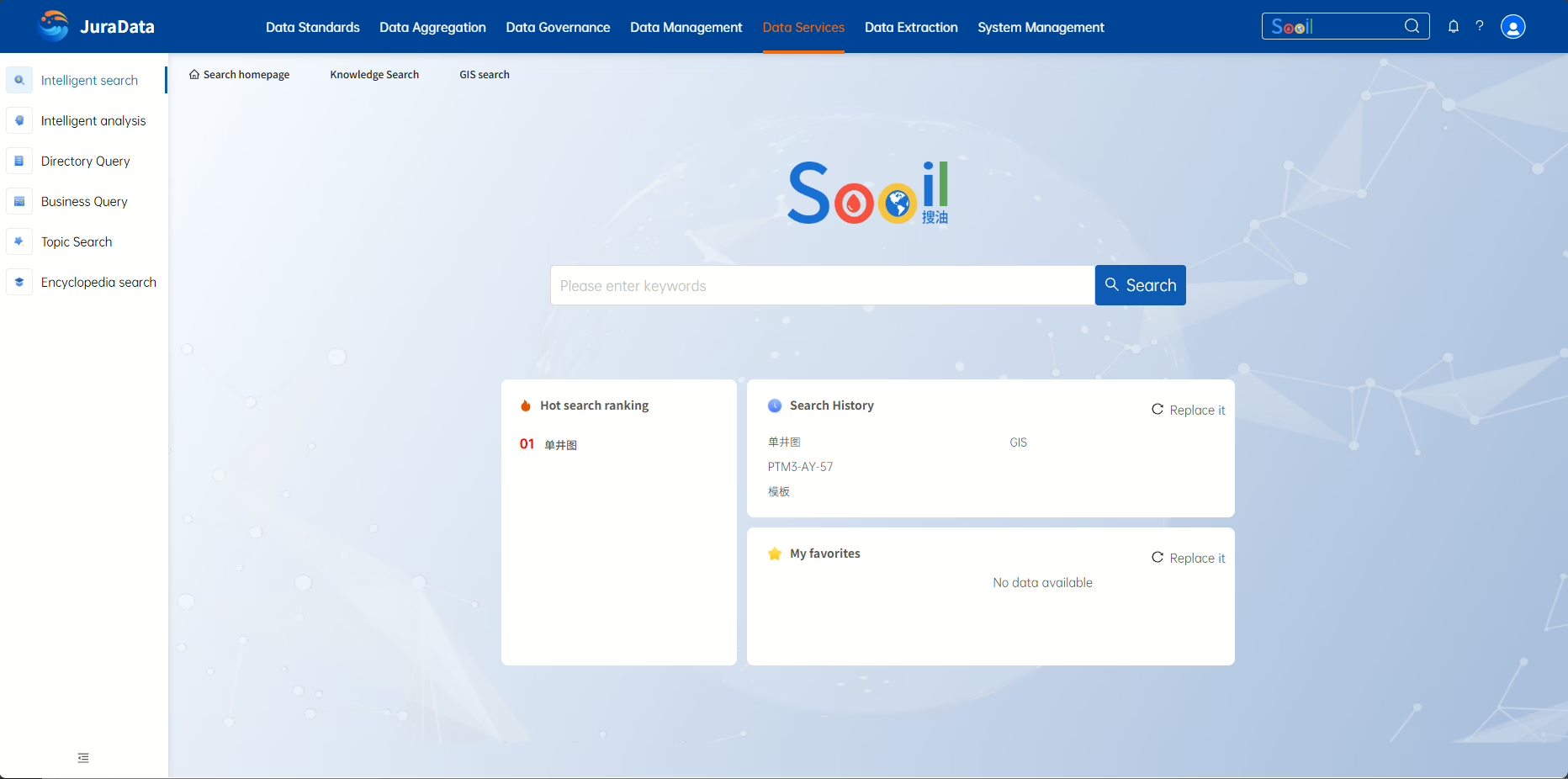
Empower users with intelligent search, knowledge graphs, and proactive delivery to quickly access the data they need and maximize efficiency.
Govern data and enrich business semantics to make oil and gas data AI-ready, enabling intelligent agents to access and use it while ensuring end-to-end result traceability.

| Core Role | Core Problem Addressed | Corresponding Core Capabilities |
| Data Operating System | Enable data to be dynamically organized, continuously supplied, and uniformly served based on business logic. | Unify data integration and access, intelligent search and push, unified API services, and data service monitoring. |
| Data Governance Platform | Ensure unified data standards, controllable quality, traceable processes, and visible assets. | Business-driven modeling and standard management, integrated historical data governance, source-level governance for new data, closed-loop data quality management, and panoramic data asset view. |
| Business Collaboration Foundation | Enable cross-disciplinary teams to collaborate around a unified data context. | Project-level data space, automatic accumulation of process deliverables, professional software data integration, and one-click deliverable publishing. |
| Intelligent Application Foundation | Provide unified semantics, high-quality datasets, and explainability for AI models. | Unify business semantics, high-quality training datasets, knowledge graphs, intelligent data Q&A and report generation, and domestic computing power adaptation. |
Covering key upstream domains including exploration, well engineering, reservoir development, and production facilities, the framework incorporates 16,000+ business datasets, 160,000+ data item standards, 58 categories of data quality rules, and 50,000+ rule instances. It provides a comprehensive foundation for enterprise data standardization and governance while supporting alignment with OSDU standards.
A unified governance framework for structured data, unstructured content, real-time data, and professional deliverables, covering the full lifecycle from standards and historical cleansing to source governance, quality control, asset management, and data services. It reduces fragmented toolchains and enables consistent, scalable enterprise data governance.

Built on an oil & gas business ontology, the framework enriches governed data with business semantics, object relationships, quality rules, and traceability throughout the governance process. It transforms enterprise data into AI-understandable, callable, and verifiable assets, supporting knowledge graphs, AI datasets, foundation models, and intelligent agents.

Challenges
Solution
Challenges
Solution
Challenges
Solution
Building a unified data lake platform to integrate development and production data, supporting smart oilfield operations and scientific decision-making.
Development and production-related systems
Core business databases
Development and production datasets
Total data records
Approximately 5,600 datasets and 1.8 billion data records.
58 development and production-related systems with 3,145 business functions.
Serving users across headquarters, branches, research institutes, operation companies, and field platforms.
Inconsistent standards, fragmented systems, and low data integration.
Revise unified data standards, covering 2,541 datasets and 35,836 data items.
Develop collection specifications for 475 collection roles and 71 departments, forming 14,085 data validation rules.
Enable semi-automated and standardized data collection through unified collection services.
Build a unified data platform, aggregate and govern historical data, and provide unified data services.
Optimize 3,145 application functions into 1,905 under a unified framework, with 504 new functions added.
Integrate 58 systems into one unified platform entrance.
Upgrade from offline data silos to one unified data lake.
Build a unified development and production application platform.
Transform scattered and heterogeneous data into standardized data assets.
Ensure consistent data definitions and business logic.
Shift from incomplete collection to full and standardized data collection.
Historical data aggregation
Cleaned high-quality data
Data validation rules
Optimized application functions
Original: 3,145 / New: 504
Quick Links
About Us