Data Governance Solutions for
the Oil & Gas Industry

We do not just govern data,we govern the core of your business. By building an integrated, business-oriented data management platform, we empower you to convert data into precise decision-making capabilities and driving force for business innovation. This enhances efficiency across the entire value chain and truly unlocks the deep-seated value of your data.

Integrated Oil & Gas Data Management Solution

JuraData features a built-in comprehensive methodology for business modeling and standard modeling, supporting the systematic analysis and standardized modeling of data spanning over 16,000 business nodes in the oil and gas industry.


The platform offers extensive data coverage, including diverse professional data types such as structured, unstructured, logging, seismic, and graphical data, and is fully compatible with the OSDU standard system.
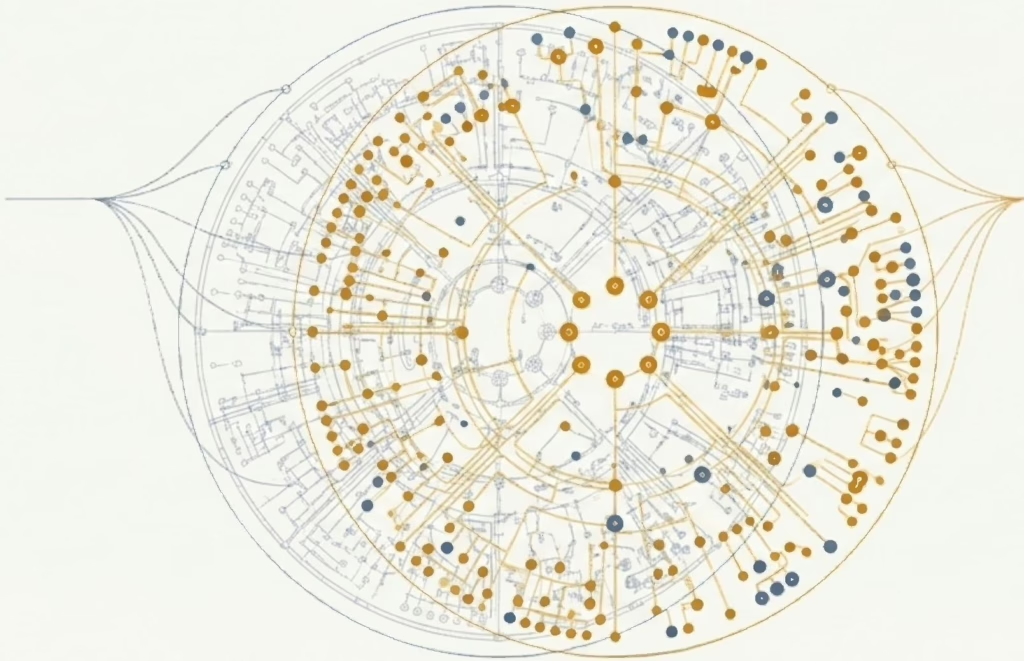
Built-in Data Standards

Semantic Gaps and Definition Conflicts:Inconsistent definitions and algorithms for the same business concepts result in data that is visible but unmatchable, making cross-disciplinary collaboration extremely difficult.

Disconnect Between Standards and Business Logic: Traditional standards often center on IT fields, tables, and systems, failing to capture the complex logic of oil and gas exploration and development. Data is stripped of its business semantics.

Dead Data of Historical Assets:​ Frequent changes in standards and inconsistent semantics render massive historical archives unusable for automation, significantly complicating governance.

A one-stop data management tool that includes:

  1. Ontology modeling
  2. Data integration
  3. Data collection
  4. Data processing
  5. Governance operations
  6. Knowledge management
  7. Unified data services
  8. Built-in standards and quality inspection rules (50,000+ resources).

AI-Ready Asset Foundation: Transform messy raw data into machine-understandable structured assets, providing clean, reliable knowledge fuel for Large Language Models (LLMs) and eliminating hallucinations.

Activating the Residual Value of Historical Assets: Convert decades of accumulated unstructured reports from Middle East oilfields into computable and searchable databases, enabling the automated retrieval of historical expert experience.

Enhanced R&D and Decision-Making Efficiency: Achieve data finds people through the tool, improving R&D and decision-making efficiency by 5 to 10 times.

Data Can Be Stored but Not Found or Utilized: Traditional tools focus on physical storage and lack business logic connections. Engineers spend over 70% of their time finding, merging, and cleaning data.

Semantic and Logical Disconnect: Traditional governance, based on IT fields and table structures, does not understand oil and gas business mechanisms. This results in data that remains dead even after governance, making it unusable for AI-driven analysis and reasoning.

Massive Dormant Unstructured Data: Traditional data governance fails to extract business parameters and conclusions from this data, preventing core experiential knowledge from being transformed into reusable assets.

Innovative Five-Dimensional Business Ontology Modeling:​ Define minimal business nodes and relationships that comprehensively cover oil and gas operations.

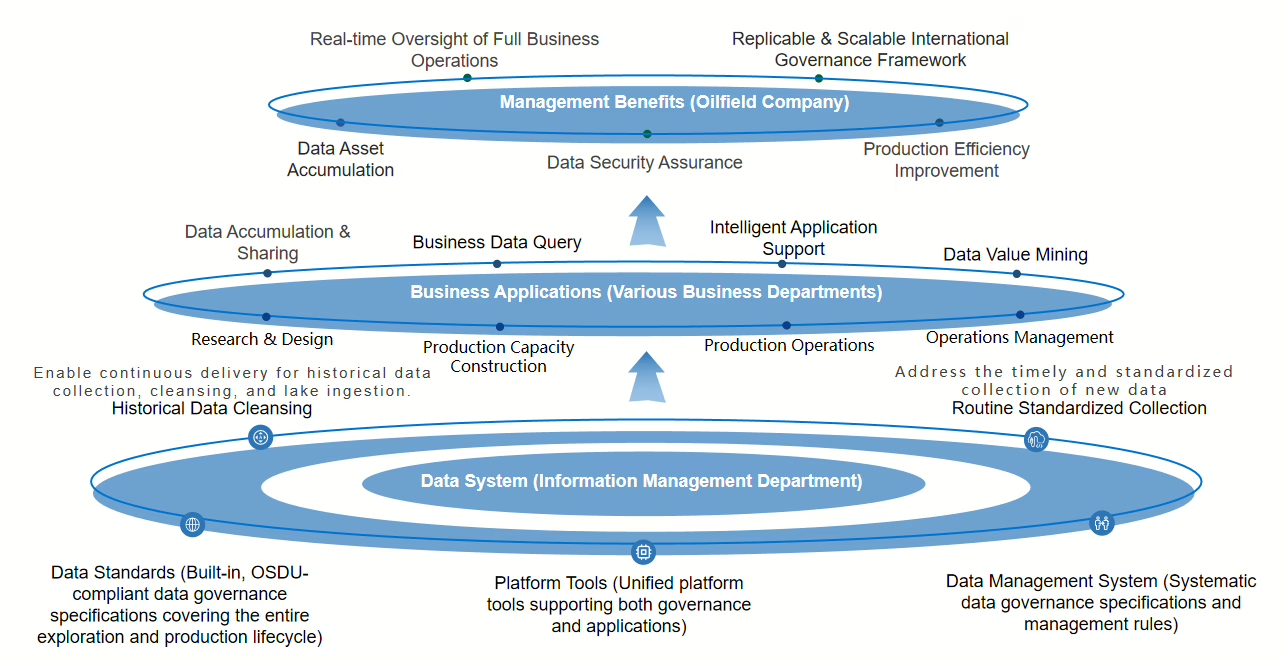
Integrated Data Standards Compatible with OSDU: Leverage OSDU’s descriptive framework and integrates international standards like Energy Flow and PPDM to establish a stable, comprehensive oil and gas data standard, encompassing over 16,000 business nodes and 160,000 business data items.

Clarify Oil and Gas Business:Instead of managing data first, we begin by modeling the business clearly, establishing a unified industry-wide data standard framework.

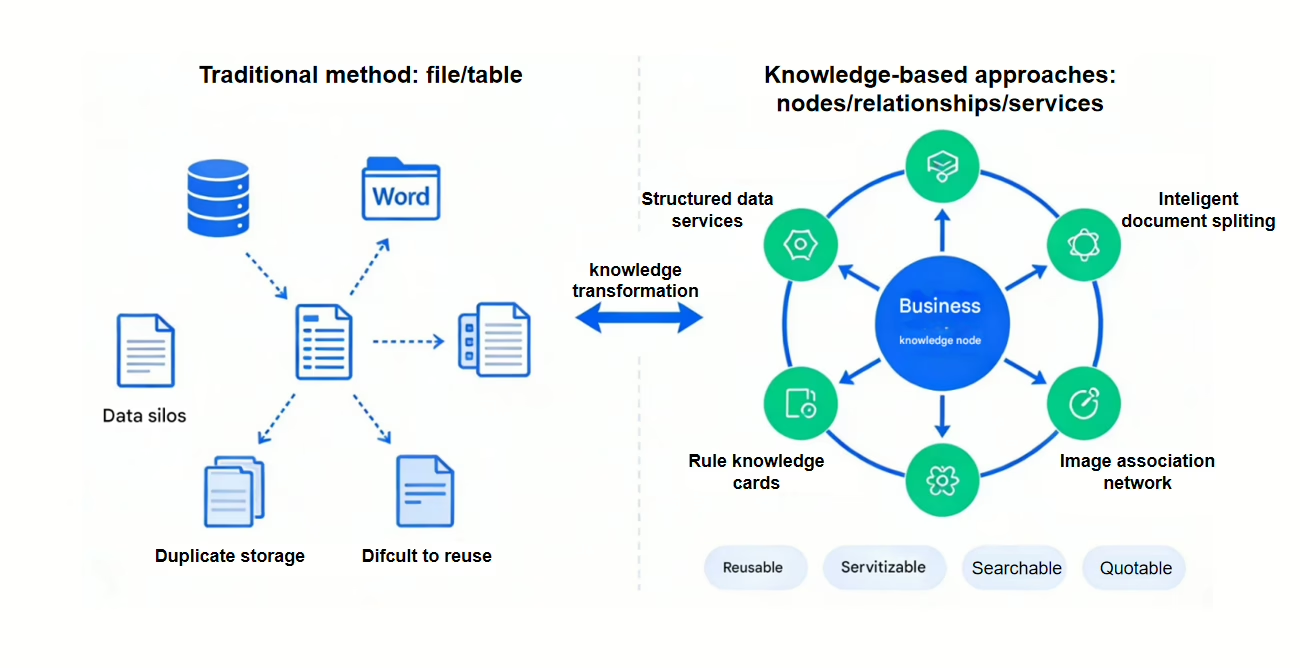
Knowledge Management at Minimal Business Granularity: Data is organized by business nodes rather than by systems or files. From a business perspective, users can pinpoint “which data, references, and deliverables are needed for this specific process.”

Built-in Industry Standards Compatible with OSDU: Eliminate the need to start from scratch. Accelerate data standard development and increase data governance efficiency by threefold.

Data Governance Tool

Historical Data Governance

Multi-Source Heterogeneity Leading to Incomprehension and Incomplete Retrieval: Data formats vary widely, and the lack of a unified parsing mechanism leads to data scattered across multiple isolated systems, creating a high “data wall.”

Unreliable Quality Leading to Reluctance to Use: Common issues include inconsistent historical data entry standards, missing key metadata, unit conflicts, and chaotic coordinate systems.

Tacit Knowledge Leading to Inability to Transfer: The most valuable understanding of oilfield mechanisms and development experience is submerged in tens of thousands of reports and expert minds. This implicit knowledge cannot be retrieved or passed down through digital systems.

Data Aggregation: Break down barriers between structured data, unstructured data, and specialized software, enabling one-stop integration of industry-wide data.

Structured Data: Slice and extract tags based on business nodes, allowing tables/fields to align with the business semantic framework.

Unstructured Documents: Split documents by chapters or topics, forming searchable and traceable knowledge fragments.

Quality Inspection Rule Management: Embed business rules into the platform, enabling quality issues to be pinpointed to specific business nodes and their impact scope. Data cleansing is performed based on problem classification.

Asset Management + Quality Inspection Operations Management: Establish a data asset system that is manageable, traceable, and closed-loop.

Unified Management: From Data Fragments to Digital Assets: Transforms decades of scattered, multi-source materials into unified, standardized, and accessible business assets. Data retrieval time is reduced from days to seconds.

Trustworthy and Traceable Decision Evidence Chain: Every piece of historical data after governance is complete, reliable, and traceable, enhancing the scientific rigor and trust in decision-making.

Digitization and Inheritance of Expert Knowledge: Through knowledge-driven governance of historical data, dispersed expert experience is transformed into enterprise-level knowledge assets.

Garbage In, Garbage Out: Source data collection lacks business constraints, leading to errors, omissions, and logical contradictions during data entry. Subsequently, significant additional effort is required for data cleaning.

Disconnect Between Standards and Execution: Data standards are not enforced within actual collection interfaces, resulting in data that is correct in format but incorrect in semantics.

Delayed Validation and Long Feedback Cycles​: Quality checks typically occur during the post-evaluation phase after data entry. By the time issues are identified, weeks may have passed, making retrospective corrections difficult and leading to an accumulation of unresolved data problems.

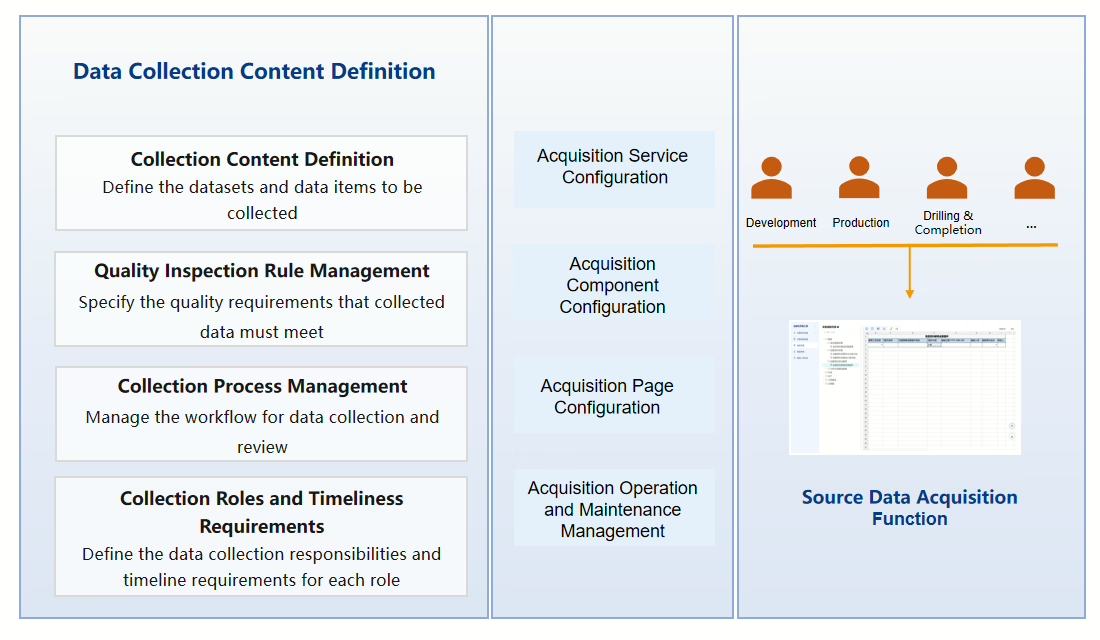
Three Types of ManagementDefinition of collection content, management of quality inspection rule invocation, and management of collection processes.

Utilize tools to configure collection services and functions, which can be called by source systems. This ensures that business systems adhere to quality constraints during the data collection phase.

Significantly Reduce Governance Costs​: By standardizing collection at the source, shift from firefighting governance to proactive management, reducing data cleaning efforts by over 70%.

Ensure Timeliness and Reliability of Decision-Making Data​: Guarantee that data entering the data center is high-quality assets that can directly support production scheduling.

Establish an Enterprise-Wide Single Source of Truth: Eliminate data definition conflicts across departments and systems. All collected data adheres to a unified business ontology standard, enhancing trust and collaboration across disciplines.

Standardized Collection of New Data

Providing Unified Data Services

Translation Barrier Between Business and IT​: Traditional data services are based on database tables and fields. Business personnel struggle to understand table structures, while IT developers often lack a grasp of business logic, leading to high communication costs in data retrieval and usage.

Developers’ Logic Trap​: When calling data, developers often need to write complex join queries and calculation logic. Any change in business rules can cause all downstream applications to fail.

Service Granularity: Too Coarse or Too Fine

Traditional APIs either expose entire tables directly or are rigid, page-specific interfaces that cannot be flexibly reused.

Business Query: Business query / catalog query / object query / knowledge encyclopedia, with retrieval entry points organized around business nodes.
 
Data Service: Business node-based data services + API services, enabling rapid data reuse for business systems.
 
Intelligent Services:​ Intelligent Q&A / intelligent BI / intelligent data query / intelligent analysis, establishing a unified entry point from data → analysis → decision.

Transformative Improvement in Research and Efficiency: Business experts achieve self-service data access. Data acquisition time is reduced from weeks or days to seconds, allowing engineers to focus on research rather than data preparation.

Application Development Cycle Shortened by Over 60%: With standardized business data services, building new applications becomes as simple as assembling building blocks. Applications gain exceptional agility during rapid iterations.

Trustworthy Industry Intelligent Services: Addresses the issue of AI making authoritative but incorrect statements in specialized fields. Through business node services, AI outputs are highly interpretable and backed by complete evidence.

Case Study

XX Group is a large energy enterprise undergoing digital transformation and implementing its Smart Oilfield strategic plan. Its operations involve complex development and production processes, supported by massive data assets.

Business Challenges

Data Volume & Fragmentation: 58 development and production systems, 10 core databases, ~5,600 datasets, and ~1.8 billion data records


Application Proliferation: 58 independently or centrally built systems with 3,145 business functions


Broad User Base: Multi-level users from headquarters to field operations, including leadership, managers, engineers, and platform operators


Governance Urgency: Pressing need to unify data standards, integrate siloed systems, and improve data integration under the Smart Oilfield initiative

Solution & Implementation​

XX Group establishes a unified development and production data management system through a five-pillar approach:

Standardization​
Revised and unified data standards covering 2,541 core business datasets and 35,836 data items
  1. Established collection standards and detailed guidelines across 475 collection roles and 71 departments
  2. Implemented 14,085 data validation rules
Enabled semi-automated, standardized data collection through unified collection services
  1. Built a unified data platform for historical data aggregation and governance
  2. Cleaned 600 million core database records to 512 million high-quality records
  3. Provided unified data services
  1. Consolidated 3,145 application functions into 1,905 optimized functions within a unified framework
  2. Added 504 new application functions

Business Value

Turn Your Data into Your Most Strategic Asset

Discover how Jurassic Software's data governance solution can unlock your data's full potential, drive intelligent decisions across your value chain, and build your AI-ready future.