Intelligent Drilling Business Application Platform
Built on OiO’s Five-Dimensional Business Ontology Model, integrating drilling data, visualization, knowledge, and intelligent capabilities.
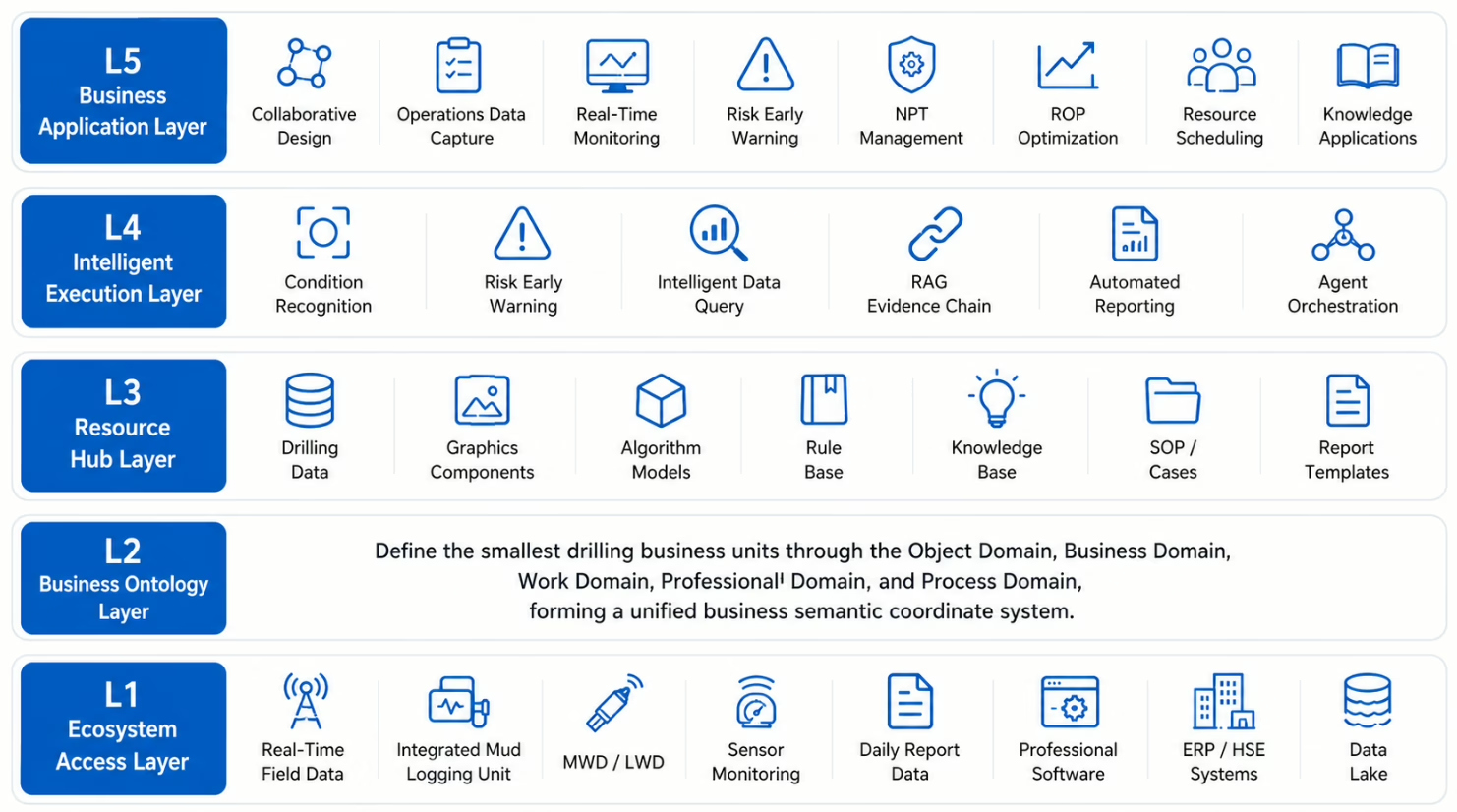
JuraDOM is an intelligent application platform for drilling operations built on OiO’s Five-Dimensional Business Ontology Modeling framework. It supports a wide range of scenarios, including collaborative drilling design, field data acquisition, real-time operations monitoring, AI-assisted risk early warning, detailed NPT management, rate-of-penetration optimization, resource scheduling, standardized operations, knowledge accumulation, and AI agent applications.
By integrating these capabilities, JuraDOM helps oilfield operators and drilling service companies improve operational visibility, data quality, cross-functional collaboration, risk response, and continuous improvement across the drilling lifecycle.
Wellbore parameters, equipment status, geological data, etc., are scattered across multiple systems, making data collection and integration difficult by traditional methods.
Operational risks such as kicks, lost circulation, and stuck pipe rely on manual judgment, leading to untimely warnings.
Non-productive time accounts for an excessively high proportion of the operational cycle, such as equipment failure, waiting for instructions and time spent on handling complex situations.
Lack of standards for ROP, costs and contractor performance. As a results, drilling efficiency improvements is challenging.
Manual reporting causes delays in transmitting operational information, leading to slow responses to complex situations.
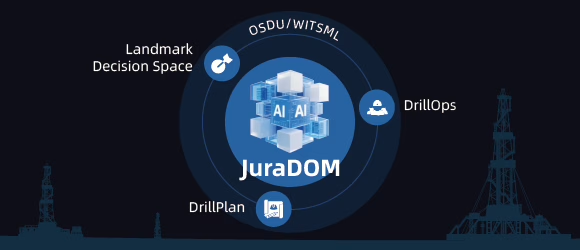
Built on OSDU/WITSML standards, seamlessly linking with Landmark, DrillPlan, DrillOps, and other mainstream platforms—no barriers, no silos.
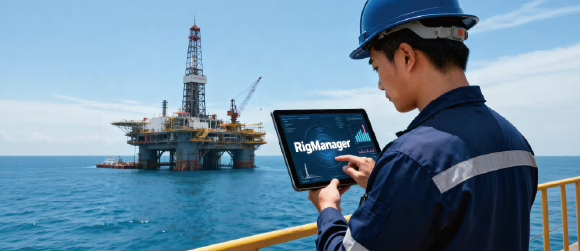
Rig Manager App supports mobile, offline, and voice control, with AR-powered remote collaboration—work anywhere, anytime.
Trained on expert-labeled datasets, delivering sharper optimization and earlier warnings than generic AI.
Lightweight edge deployment brings intelligence directly to the rig site, ensuring fast, reliable decisions even in weak network environments.
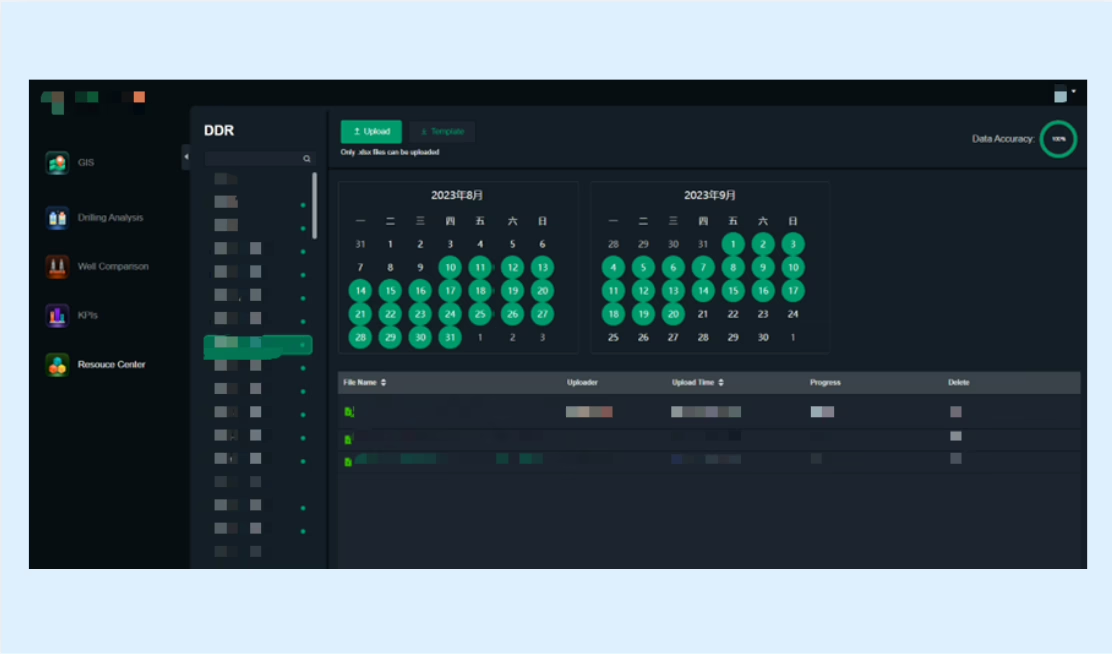
During drilling operations, multiple disciplines continuously generate large volumes of field data. JuraDOM embeds standardized data capture, real-time integration, offline collection, and quality validation into operational workflows, creating a unified and trusted data foundation for monitoring, analysis, early warning, and post-operation review.
Challenges
Solution
JuraDOM standardizes drilling design workflows, integrates professional tools, and enables seamless data exchange across drilling, completion, and production. It connects design with field execution for unified task, data, and deliverable management.
Challenges
Solution
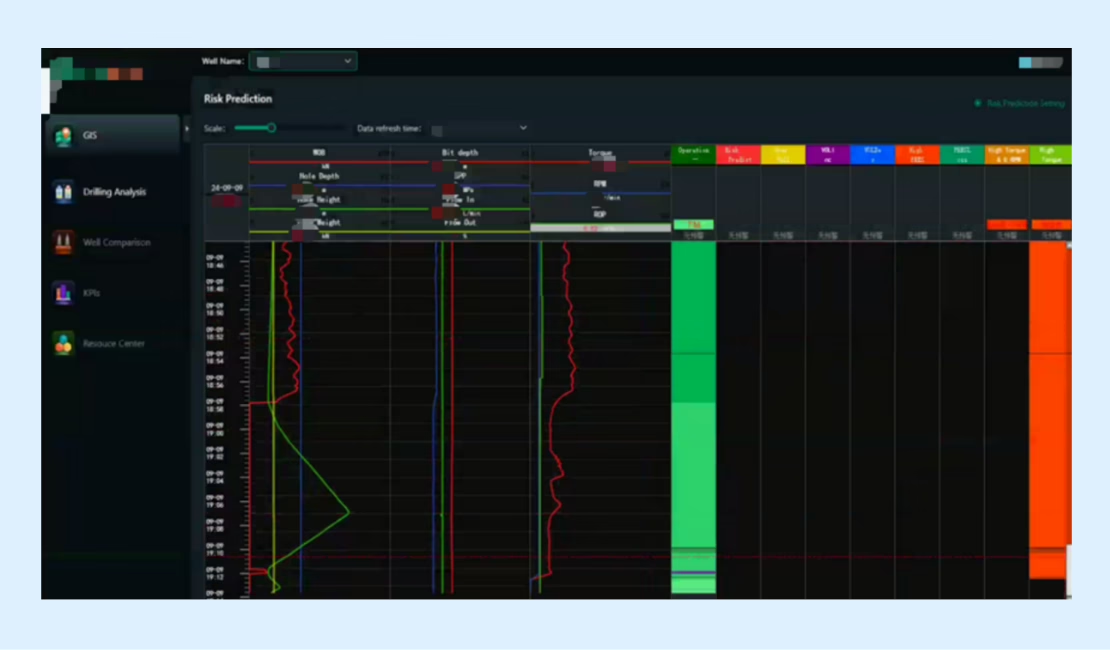
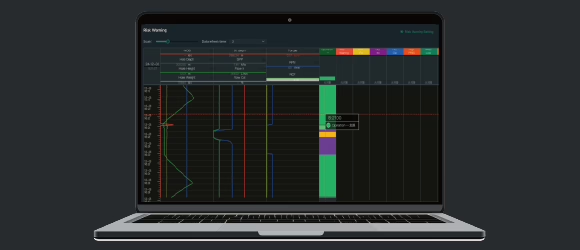
JuraDOM combines real-time data, operating conditions, risk rules, and historical cases to identify drilling risks through multi-parameter analysis. It supports a closed-loop process from early warning and expert confirmation to response, feedback, and knowledge capture.
Challenges
Solution
JuraDOM unifies drilling data, visualizations, rules, knowledge, models, and business components, providing configurable and reusable agent development capabilities for R&D teams, implementation teams, and partners.
Challenges
Solution
Traditional drilling production management systems, real-time monitoring platforms, professional design software, and standalone AI solutions typically address only individual stages of the workflow. JuraDOM is not built around simply adding more functions or stronger AI capabilities. Instead, it leverages a drilling business ontology to unify data, workflows, visualizations, rules, knowledge, models, and AI agents, enabling seamless integration across design, execution, monitoring, analysis, and post-operation review.
Comparison Target | Common Capabilities | Typical Limitations | JuraDOM Differentiation |
Traditional Drilling Production Management Systems | Daily reports Planning management Progress tracking Dashboards Statistics and basic reporting | Focus mainly on workflows and reports. Limited real-time operational understanding. Limited professional visualization capabilities. Lack intelligent analysis capabilities. | Organizes drilling data, visualization, rules, knowledge, and AI capabilities. Uses drilling business ontology to build an integrated business chain. |
Real-Time Data Monitoring & Dashboard Platforms | Real-time curves Multi-well overview Parameter display Alarm monitoring | Mainly display operational data. Lack deep operational understanding. Limited risk analysis capability. Lack NPT management and closed-loop response. | Connects conditions, risks, events, actions, and reviews. Builds single-well and multi-well operational profiles. |
Data Hubs / OSDU Platforms | Unified data ingestion Data models Data services API access | Focus mainly on data foundation. Lack direct integration with drilling workflows. Lack professional scenarios and operational applications. | Extends data capabilities into drilling operations. Supports workflows, visualization, and intelligent applications through OiO Data Operating System. |
Standalone Algorithms & AI Warning Products | Risk prediction Parameter recommendation Anomaly detection Machine learning models | Models are isolated. Lack business rules and evidence chains. Lack expert validation and knowledge feedback loops. | Combines rules, models, RAG, and expert confirmation. Creates explainable, traceable, and continuously optimized risk management. |
General LLM / RAG Knowledge Platforms | Document Q&A Knowledge retrieval Summarization Content generation | Lack drilling-specific objects and workflows. Lack professional parameters and semantics. Generate generalized results. | Built on drilling business ontology and knowledge graphs. Creates scenario-based knowledge applications. |
Professional Drilling Design Software | Well trajectory design Well structure design Engineering calculations Simulation | Strong in professional calculations. Limited data acquisition capability. Limited execution monitoring and collaboration. Lack intelligent operations. | Connects design data with execution monitoring. Supports deviation analysis and operational reviews through JuraDataHub. |
General Low-Code / BI Platforms | Reports Dashboards Workflow configuration Interface integration | Lack drilling-specific components. Lack visualization templates. Lack business rules and data models. Lack professional knowledge. | Provides drilling-specific components, graphics, rules, knowledge, and AI templates. Acts as a professional drilling application development platform. |
As drilling activity and operational scale continue to expand, the customer faces a range of challenges across design, execution, and management. Design data remains disconnected from field data, historical information is scattered across reports and documents, risk warnings are often delayed, KPI reporting relies heavily on manual consolidation, and valuable experience is difficult to retrieve and reuse.
The customer therefore required an integrated digital drilling system covering the full lifecycle of design, execution, monitoring, analysis, and review. The system needed to enable unified multidisciplinary data management, dynamic comparison between design and actual execution, and intelligent identification of operational risks.
|
◉
Multi-Source Data Integration and GovernanceIntegrates real-time logging data, engineering parameters, design deliverables, and historical records to establish a complete and reliable drilling data foundation. |
↔
Dynamic Design-to-Execution ComparisonConnects design data with field execution data and compares well depth, trajectory, parameters, progress, and key indicators to identify deviations. |
⚡
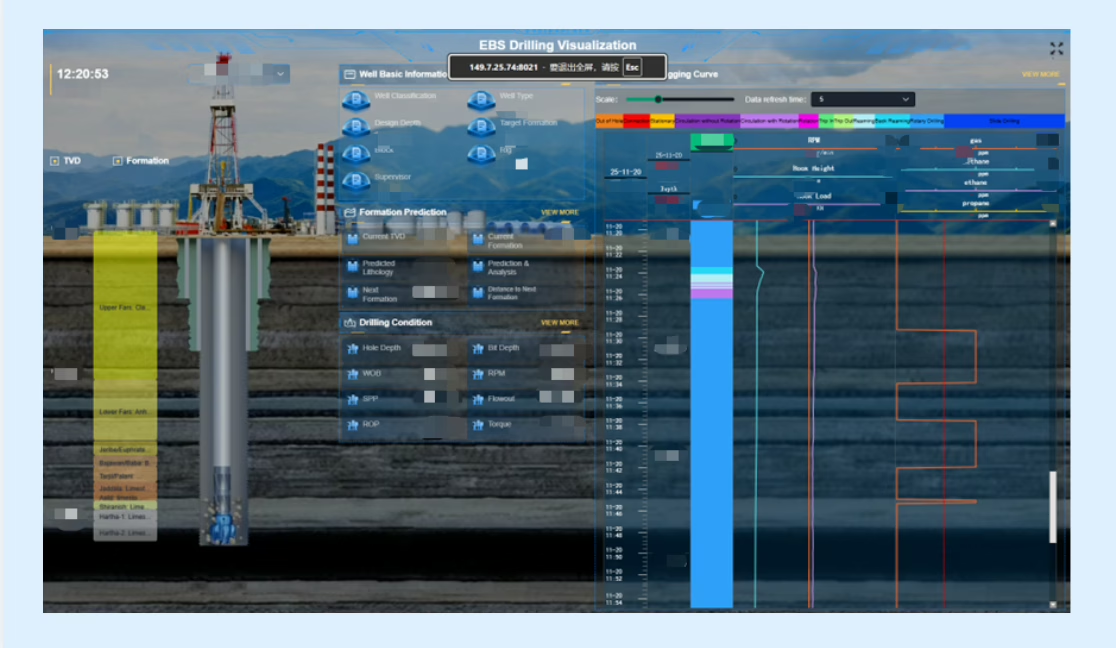
Operational Monitoring and Risk WarningProvides single-well monitoring, operating-condition recognition, multi-parameter warning, and risk prediction for real-time drilling management. |
▥
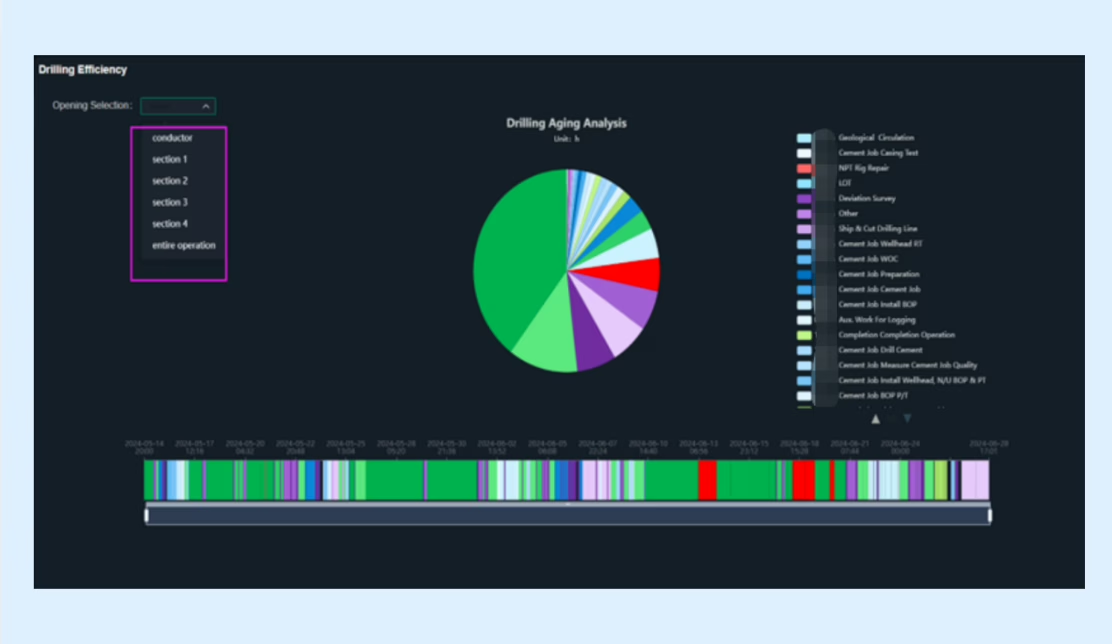
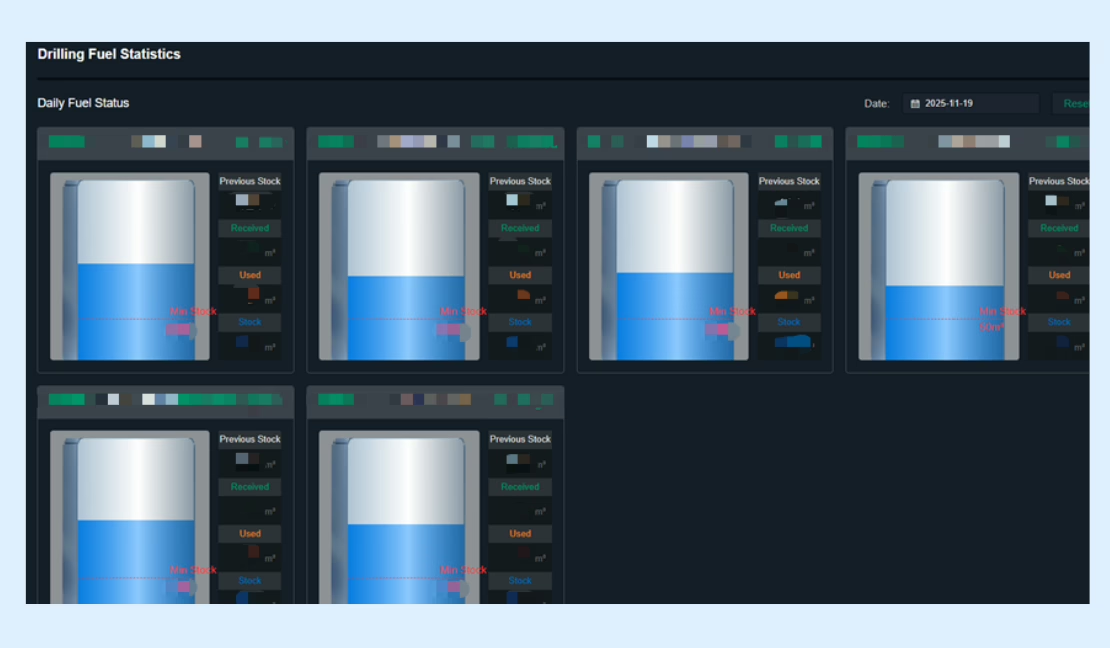
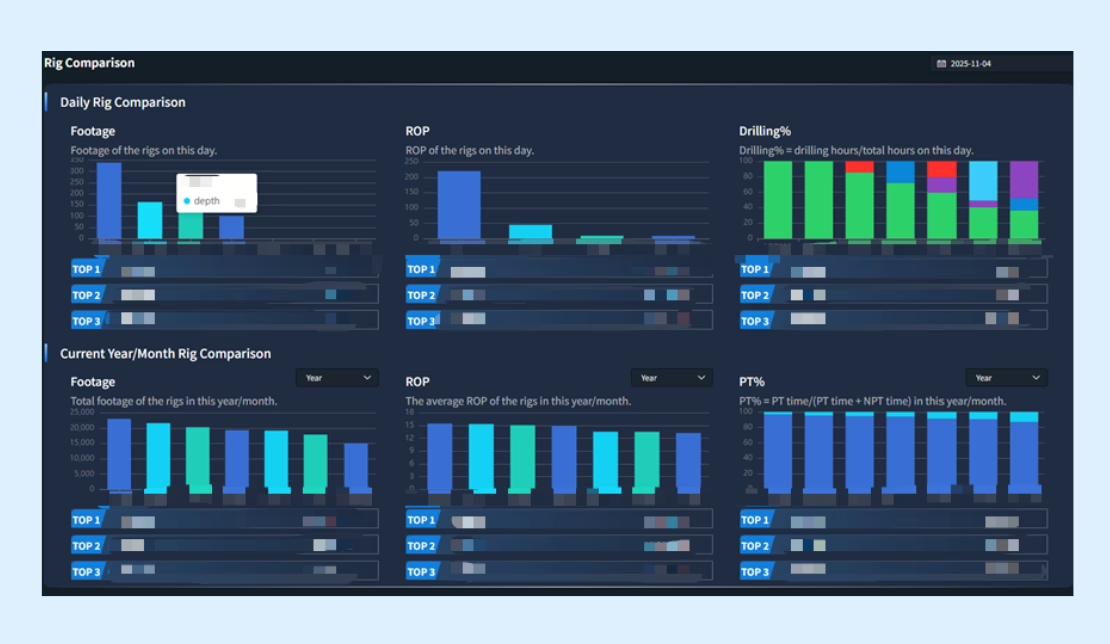
Drilling Analytics and Resource CollaborationSupports daily report analysis, multi-well comparison, NPT management, drilling optimization, KPI analysis, and collaborative decision-making. |
▣ Improved Data Utilization
| ↔ Stronger Design–Execution Collaboration
| ⚡ Enhanced Risk Management
| ▥ More Efficient Management Analysis
|
Early warnings of drilling complexities reduce accidents.
Improved drilling performance and reduced NPT.
Multi-dimensional, real-time visualization leads to better decisions.
Shorter learning curves for new wells.
About Us