What is OiO?

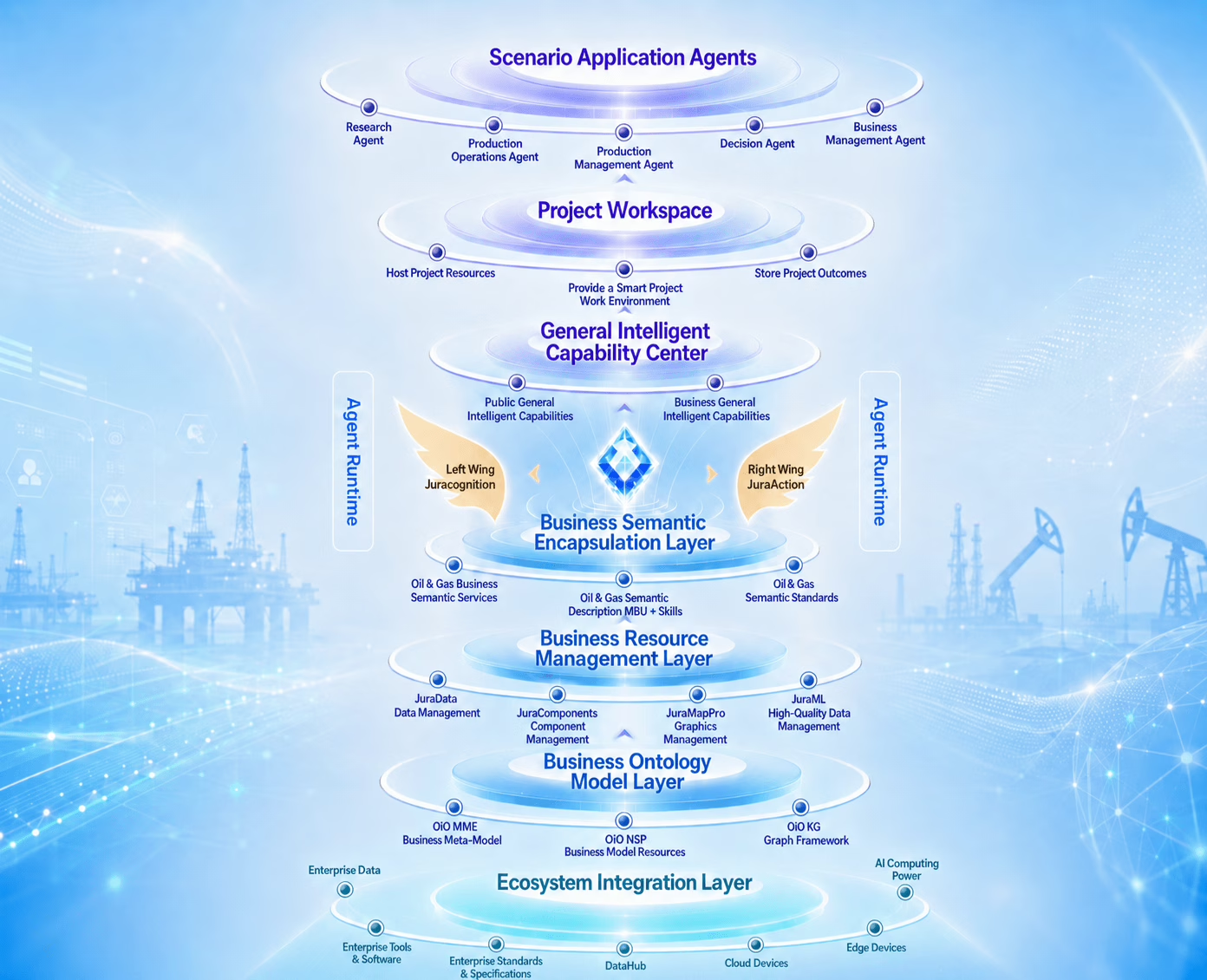
The OiO (Oil in One) Integrated Exploration & Development Intelligent Platform is constructed on a unified six-layer architecture designed to eliminate data silos, integrate AI with business operations, and promote the intelligent transformation of the oil and gas industry.

Leveraging thirty years of expertise in digital solutions, Jurassic’s OiO platform equips oil companies with three primary capabilities: data governance, AI execution, and business insight. 

Challenges in Digital Transformation

The digital transformation of the oil and gas sector encounters four critical barriers: data silos, unscalable AI, misalignment between technology and business objectives, and disconnect within the ecosystem. The OiO integrated intelligent platform serves as a comprehensive solution to address these challenges and to fully realize digital potential.

How to Accelerate Oil & Gas Digitalization?

The primary challenge has shifted from the deployment of technology to the creation of business value. Our business-driven approach facilitates the transformation of disparate tools into intelligent systems that are intricately integrated within workflows, ultimately resulting in the generation of tangible value.

Key Challenges

→ Data Silos?
→ Technology Without  Business Alignment?
→ AI Struggling to Scale?
→ A Fragmented Ecosystem?

Unify semantics and model workflows to capture industry knowledge. By combining knowledge graphs with business models, systems can truly understand the business and execute effectively.

Build on the OiO platform to create a common foundation for data and applications. Break down silos and establish end-to-end governance covering standards, quality, assets, and services.

Use business-point models to simplify complex workflows, align systems with business logic, and make AI an intrinsic driver of operations, achieving deep integration of intelligence and business.

Oil & Gas Digitalization Transformation, Powered by OiO

The OiO integrated intelligent platform is designed with a six-layer architecture that offers systematic support for the intelligent transformation of the oil and gas industry.


This framework consists of the following key layers: the Omni-domain Intelligent Solutions for Exploration and Production Layer, the Intelligent Function Engines Layer, the Intelligent Decision Center Layer, the Intelligent Resource Hub Layer, the Business Ontology Foundation Layer, and the Digital Ecosystem Layer.

Omni-domain Intelligent Solutions for E&P Layer

This layer provides specialized, scenario-based application functions and systems tailored for oil and gas enterprises throughout the entire lifecycle. It enables the automation and integration of business processes across the exploration and production (E&P) value chain.

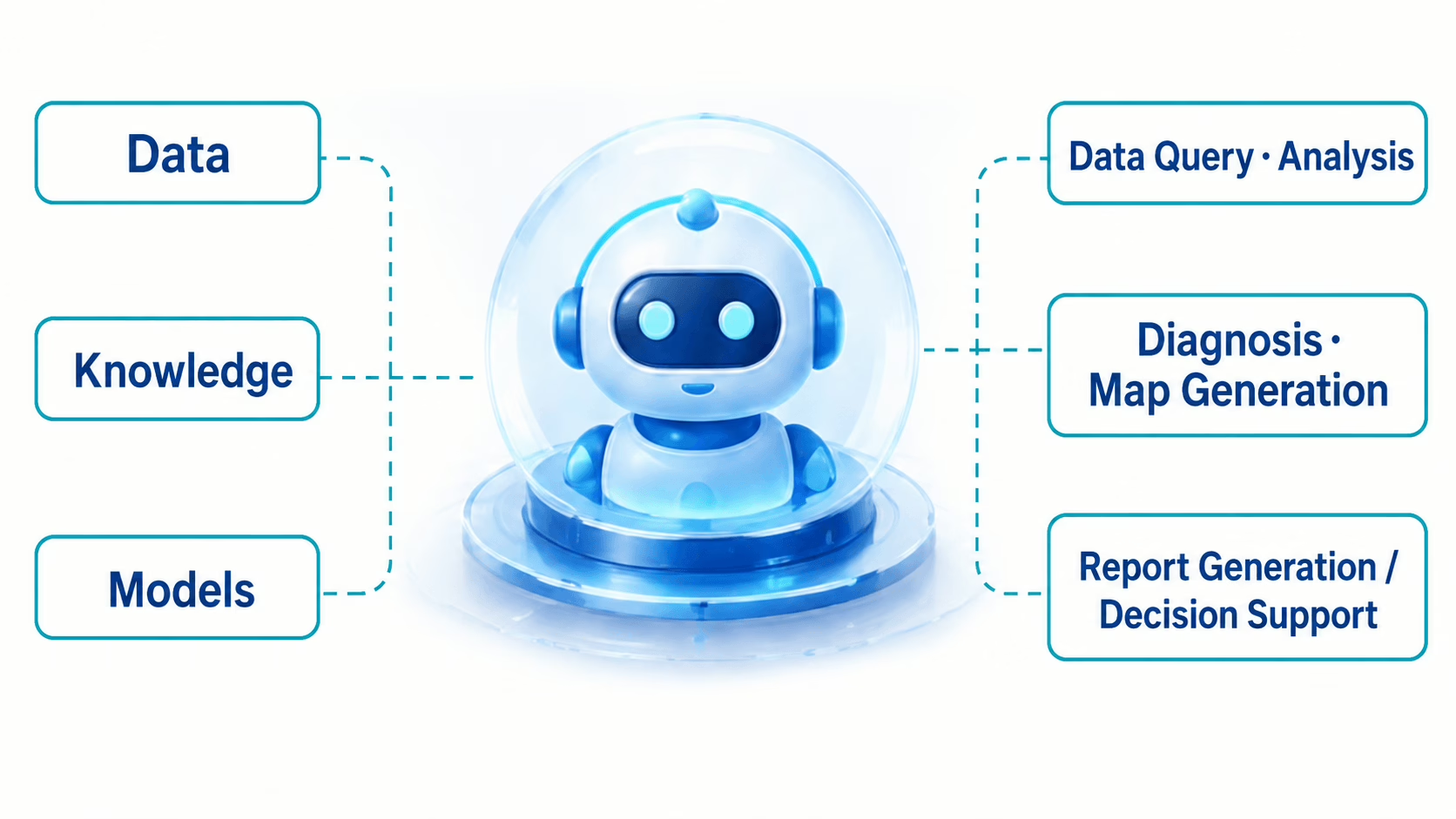
This layer provides users with daily AI efficiency tools, including functionalities for direct result generation and automated problem-solving. Furthermore, it offers AI capabilities for the development of scenario-based applications specifically designed for the Omni-domain Intelligent Solutions for Exploration and Production Layer.

This layer handles the interpretation of E&P terminology and language into the necessary steps for AI processing, thereby facilitating automatic invocation of necessary tools for execution. Moreover, it provides services for business comprehension and intelligent resource allocation to enhance the AI functions of the Intelligent Function Engine Layer.

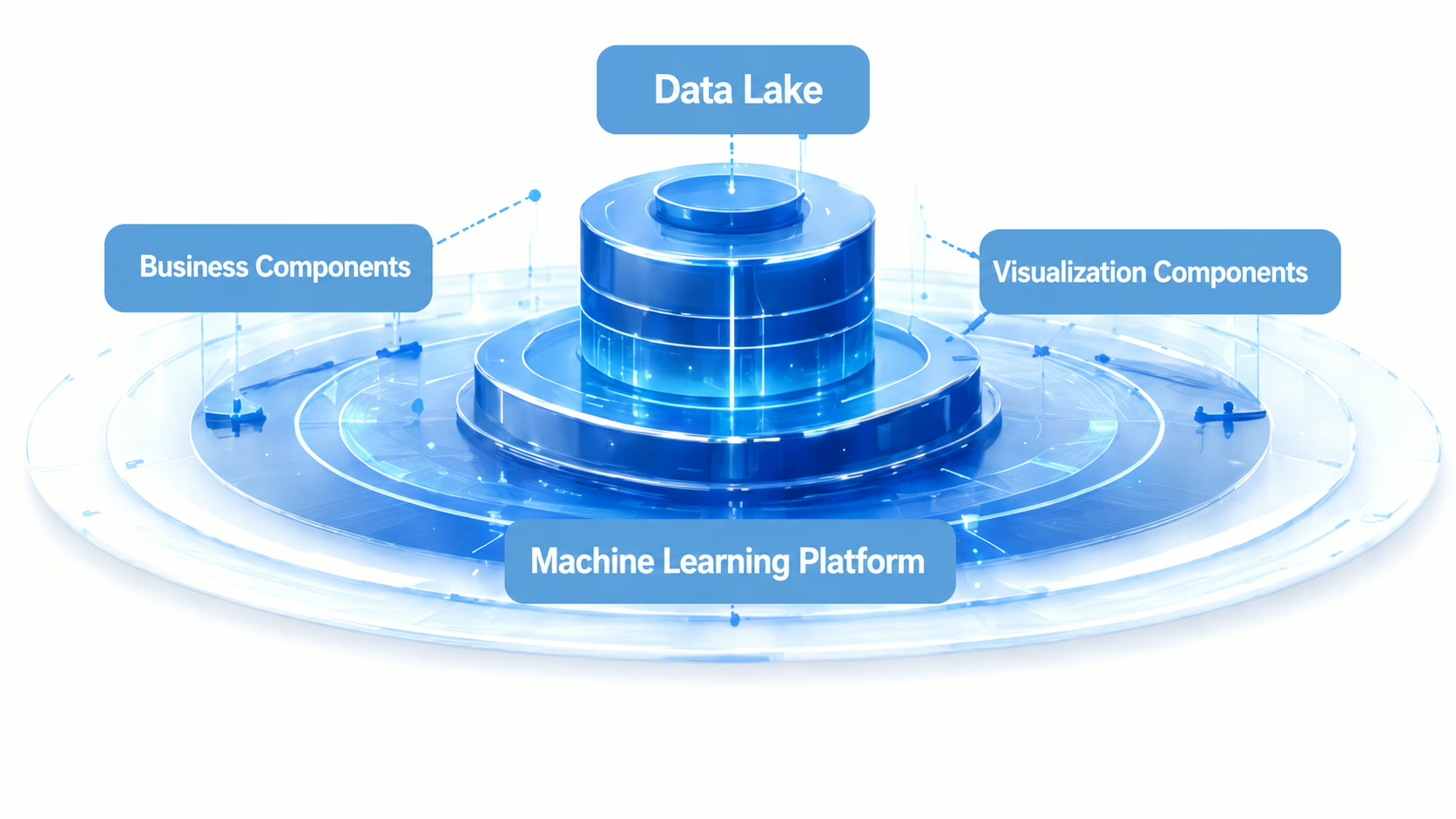
This layer integrates and uniformly manages enterprise data, components, standards, and other resources in accordance with the requirements of various business nodes within the oil and gas sector. Additionally, it provides atomic and standardized business resources to facilitate the AI automated scheduling processes of the Intelligent Decision Center Layer.

This layer establishes a foundation for the standardized expression of business resources, thereby facilitating cross-disciplinary collaboration and sharing, as well as enabling intelligent comprehension and reasoning within the oil and gas industry. It offers atomic resource integration and unified model standards to support the operations of the Intelligent Resource Hub Layer.

This layer aims to eliminate information silos, thus enabling comprehensive ecosystem integration by solving the issues of fragmented systems, data silos, and interconnection challenges among devices, thereby facilitates efficient data flow and promoting synergistic operations between systems.

Explore More OiO Integrated Products?

The Technical Advantages of OiO Platform

Standardized Business Modeling

Industry-wide models aligned with OSDU standards for lifecycle consistency and interoperability.

Integrated Digital Architecture

A unified framework that connects data, knowledge, and intelligence across the enterprise.

AI-Driven Automation

Closed-loop workflows that transform insights into execution through large models and intelligent agents.

Enterprise Data Governance

Trusted, sovereign data managed across standards, quality, and assets.

Five-Dimensional Business Ontology Modeling Technology

This technology translates the complex oil & gas workflow into over 16,000 standardized, elemental business nodes.

Scalable Framework

Modular, knowledge-based capabilities that expand seamlessly across domains.

Core Value for Our Clients

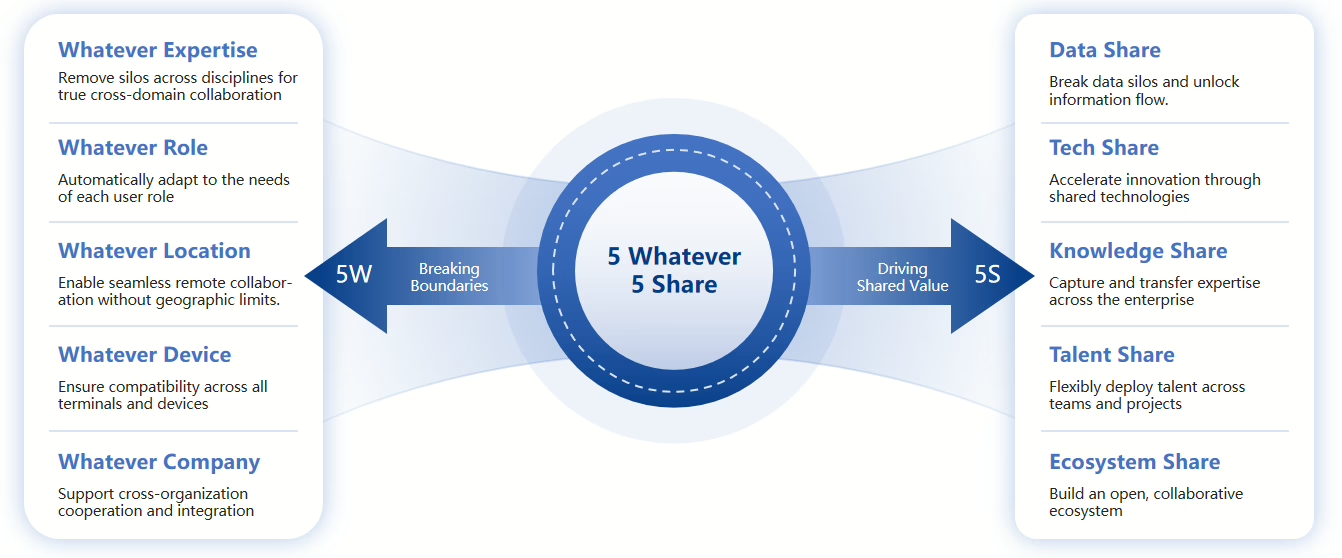
OiO’s integrated intelligent platform is founded on the “5 Whatever + 5 Share” principle, which systematically dismantles conventional physical and organizational barriers within the oil and gas sector.


By facilitating the seamless sharing of knowledge, talent, technology, ecosystems, and data throughout the value chain, the platform enhances cross-disciplinary collaboration, supports remote operations, promotes organizational interoperability, and ensures deep data integration. This approach establishes a new paradigm for open, intelligent, and highly efficient collaboration across the industry as a whole.

Case Study

Rapid Closed-Loop Handling of "Sudden Water Cut Increase" in an Overseas Oil Well

Sudden water cut increase in a well from 55% to 78%, causing a drop in oil production. On-site team required response recommendations within 2 hours.

5W (Breaking Boundaries)

Reservoir engineers, production engineers, and surface process engineers collaborated on a unified platform for the well. They analyzed a comprehensive evidence chain, which included liquid production and water cut curves, the response to water injection, comparisons with offset wells, operational history, and surface pressure differentials and conditions.

Field operators: Viewed exception alerts + handling steps + safety tips.

Engineers: Accessed root cause reasoning chain + comparative analysis + recommended actions.

Management: Monitored production impact/risk level/progress.

Real-time collaboration was established between overseas field teams and domestic research institutes, employing synchronized screens to replace the traditional use of email threads and alignment meetings.

Field personnel employed explosion-proof phones and tablets to access information regarding well exceptions and conditions, while engineers conducted thorough analyses on computers.

Project companies, research institutes, and service providers shared data and conclusions based on permissions, with all recommendations being traceable to their source.

5S (Shared Value)

JuraSearch integrated time-series, operational, injection, offset well, and surface process data with one click, auto-generating an evidence package.

The same diagnostic components/chart templates/report formats were reused across all wells, eliminating the need to rebuild charts and tables for each case.

The logic for determining the cause of the sudden water cut increase and the response pathway were documented as a case card + rule, enabling automatic recall for similar future issues.

A small number of domestic experts provided remote support for multiple wells, while on-site trainees could follow systematic steps to complete diagnostics and handling.

Recommendations were instantly converted into work orders and pushed to EAM/CMMS (or operational systems), enabling closed-loop tracking and review.

Results